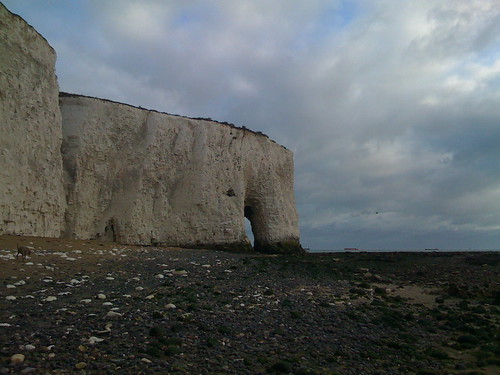
Well, they brought us here on the Kent coast plants such as Alexanders and wild fennel. As such Alexanders that we find growing around the coastline are a relic of the Roman Empire.
Until the 16th century, Alexanders was well used as a herb and vegetable when it was superseded by celery, which at that time underwent cultivation to become much milder root vegetable than it had previously been. Celery then overtook Alexanders, but it was still popular in kitchen gardens until the 18th century.

On one of my regular walks close to Margate the whole of the cliff top area is currently in full bloom with Alexanders. They can grow up to 1 metre tall. They're at their best in April. The whole plant is edible. The stems can be blanched like celery, the flower heads treated like broccoli. The seeds remain on the plants into the winter and they can be roasted and ground. These black seed heads help you mark out where the plant will be for the coming spring.
Leaves are twice pinate, with dark glossy green final leaflets with fine toothed edges. You can't mistake them in flower with their yellow umbellifers.

Kent based Miles Irving's excellent handbook The Forager has a detailed history and recipes and also mentions that they are such an invasive plant and they as a company are currently engaged by Thanet District Council to remove them along the Kent coast!

My daily walks around Margate and its nearby bays and countryside have been the most positive aspects of moving here. Within minutes of my home I'm able to explore and more often than not find some hidden treasure. I paddle in rock pools in wellies on a daily basis. I highly recommend this pass time if bored of the gym or in need of meditation!
More info on cooking Alexanders: http://www.tracingpaper.org.uk/2007/04/15/alexanders/